
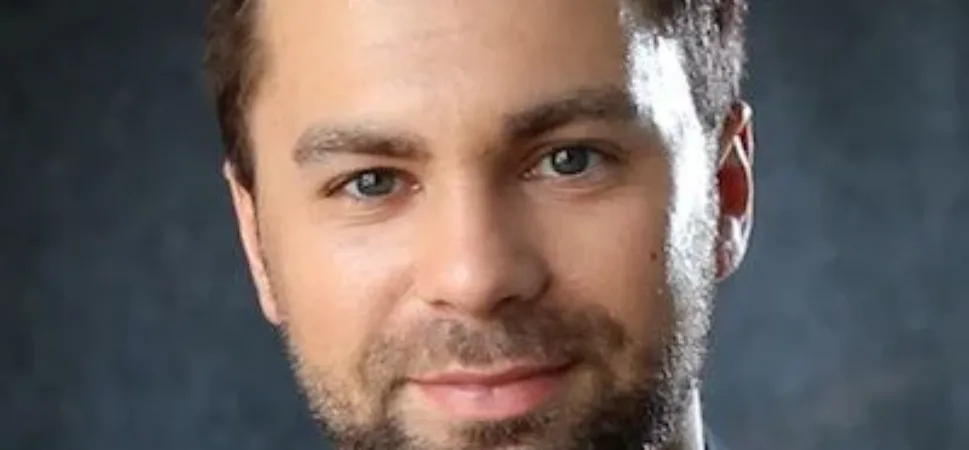
I chatted to Aaron Burns filmmaker, producer, writer, and behind brilliant films such as Beyond the Mask, Legacy Peak, Birthright Outlaw, and has worked on films including War Room and many other Kendrick movies too.
Can you first just tell us a little bit about yourself and how you became a Christian?
I’m here in the Midwest of the US in Michigan. I grew up with the parents who loved me and who taught me the faith. So it was at an early age that became real for me as well. It’s something that’s grown deeper over the years, I went off to college and it’s intertwined in some ways with my storytelling journey. I say that my dad told me stories every night and my mom gave me great books to read. I think as I grew up, we didn’t watch a ton of movies, but would play outside a lot and have a lot of adventures and create and tell stories of my own.
I fell in love with the power of storytelling and the power of stories to communicate truths and the role of the storyteller in culture is the person who gets to highlight what’s important and what matters. So, as I saw that, you know, growing up and into my college years, I felt a desire to be a part of the conversation of who gets to tell what stories and highlight those pieces.
So, kind of kind of intertwined together over the years.
And from that how did you get into filmmaking?
So my first. Well, I’ll say when I was a kid one day my dad made his biggest mistake, which is he let us borrow the chainsaw. We kept out a bunch of trees in this woods behind our house and we built a log cabin.
And then of course we had to make like a pioneer adventure movie, right? Which was a disaster, but just so much fun, you know, telling stories and embodying stories and reading stories and then acting them out and just engaging with storytelling as a craft. We did a feature film when I was in college called Pen Dragon, where we absolutely butchered one of your origin stories of King Arthur story.
And then that film wound up actually paying back the $80,000 budget that we put into it by families all over the world enjoying it and saying, this is, we love this. It’s a adventure story with heart. We can tell you guys are first time filmmakers, but when are you going to make your next movie?
So that was the time where God was kind of working on my heart and my faith was becoming my own and that led into the making of a movie called Beyond the Mask back in, we shot in 2012 released in 2015 and over the years I’ve come to have four, words that kind of describe the stories that I want to tell.
So it’s timeless, faith, family, adventure. And it’s the, at the intersection of those four words are the kind of stories that resonate with me the most deeply.
What do you look for when you’re trying to find a film to watch?
Finding the films to watch can be challenging sometimes.
I now have five kids ranging from ages 10 to two months old. And so we try to do family movie night once a week where we all get together and find something that we can watch and enjoy. So both looking for movies that we can watch and then looking for movies to make, those are similar things, those four words, timeless.
You know, Stories that speak to the deep we were just talking earlier with a friend, myths and the way that God has designed the world to work and that the storytelling narrative of heroes and villains and adventure and our call to adventure and the, the natural inclination towards beauty and truth and those things.
And then Family and adventure. Those are the core four words for me as we look for stories we want to tell, stories we want to watch.
When you take a look at streaming services and there’s not many new good family friendly movies that you can just sit down and watch
Yes. Yeah. It’s, it, it is interesting. Streaming kind of tends to divide farther and farther, farther down, down to little niches of looking for audiences and things like that. But if you go back to, you know, the golden age of Hollywood, as it were movies like It’s a wonderful life.
I sat down and showed that to my kids and from the three year old to the 10 year old to my wife and I, we loved it. And you see the, you know, the younger kids laughing at the scene where, you know, the little kid is going around when her dad is in the midst of the greatest crisis of his life saying, excuse me, excuse me, I burped, you know, pulling, it’s just such a humorous moment that my, my kids are laughing at as I’m, you know, wiping away tears, pretending not to be so moved by, you know, the crisis of life that George Bailey’s going through, right?
So just you see some of these amazing storytellers that would have a movie that is timeless and that it connects at all levels for the whole audience.
What do you hope audience take away from watching your movies?
One word that I would love for people to take away is hope. I think our modern world is so devoid of hope. When you take God. out of things, there’s no sense for why you, why you should be here, I feel like. So for, for my faith, it explains my origin, it explains my purpose, it explains my eventual destiny, and it gives me something to do while I’m here.
And it gives me hope for the, the small details of my life, and it gives me hope for the big picture. And it also gives me hope when I mess things up. Because there’s a chance for redemption for even for me and I think as you watch, watch my films, that’s, that’s one of the threads, that, that idea of there’s hope for redemption for you, there’s hope for a purpose for you, there’s hope for a, a life beyond the one you have here, that, that travels through all the films.
A theme that I love is fatherhood, that’s something that flows through a lot of the films and the stories that I’m drawn to as well, the power of, of a father and what he, the difference he can make in your life. And I think as I had a great dad who passed away a number of years ago and I think about that a lot.
And then I think about my kids, how I can inspire them and invest in them. And so those are, those are some things and thoughts that will often come through, but also just a big one is the sense of adventure. That I want, when I watch a movie, I want to be taken to a faraway place in an adventurous time and go on a journey, go on that hero’s journey with the character.
So I love movies that do that, but then in that hero’s journey, you find yourself in the story as well. So that those human connection points in the scope of a grand adventure is what we aspire to.
Out of all your films, can you pick a favourite scene?
Oh, Richard, that is a cruel question.
That’s like asking which of your kids is your favourite kid. That’s that’s not fair. I will, I’ll tell you from a recent, my most recent film I directed is Birthright Outlaw and there is a scene two thirds of the way through the movie, say, where the character played by Sarah Drew is having a conversation with her onscreen daughter, Olivia Salabia, and she’s sharing her heart with her daughter.
If I’m not careful, I’m going to spoil the whole movie, but she’s sharing the daughter’s name is Hope. And she tells her the story of how she got that name. And I think that is one of my, my favourite scenes. Just for the for the heart and the beauty of what that still means to me.
Now you’ve got a few new things coming up and one of those is a book.
Do you want to tell us a bit about that?
Sure. So a number of years ago, I stumbled across the writings of St. Patrick, who of course it’s, you know, March now and we’re trekking towards the annual St. Patrick’s Day celebration. And as, as Americans, we’re off, we often are, so you’re American, but what’s, what, you know, is your ethnicity beyond just American is where our country’s only been around for a couple hundred years.
Oh, yeah, i’m Irish American, you know, my my Irish friends will laugh at me and say no, you’re not you have nothing to do with us, but you know growing up you’ll wear a green t shirt and eat corned beef which if I don’t nobody in Ireland actually eats corned beef. But I had no idea if he was any more real than Robin Hood right but with when you read his letters that all historians agree, yeah, he wrote these, he’s a historical character.
I was so moved and inspired by the life that he led and the similarities to you know, if, if you met him today, how, how deeply he would speak and resonate with our culture. So it was excited to just love that story and excited to share it in a book form with a good friend of mine, Matt McAlladis, who I actually wrote the screenplay for a Legacy Peak with me. So we, we wrote this book together to share some of the prayers and the life and the inspiration of what the whole world celebrates on March 17th, but sometimes not knowing too much about what actually was going on.
This is a book about his prayers as well. So how has this changed your prayer life?
So it’s, it’s interesting when you think of a hero of the faith, a Paul or, you know, a Peter or a Patrick and just mind if I real quick, just let folks know who might not his a quick bio of Patrick, just a glimpse of the story. So he’s actually British. He, he probably grew up a lot closer to where you’re at than actually in Ireland.
As a kid was his dad was a deacon, his grandpas a pastor and all the religious stuff. He’s again, not interested in that. Until he gets kidnapped by Irish pirates and he spends seven years as a slave in Ireland, you know, tending, tending the sheep living out there and suffering the cold and all of those things you can imagine what life was like.
In that moment, in that environment, the things his father had taught him and his faith became real for him. He winds up escaping and getting back to Britain. Then God says, I want you to share the love and forgiveness that you’ve received and go back to the people who enslaved you and, you know, over the course of his very, the rest of his still very troubled life, the adventures and the challenges that it was to go back to the people that enslaved him.
He winds up sharing God’s love with those people and he sees the human trafficking he’s a victim of erased and he sees, you know, child sacrifice, human sacrifice wiped out and scholars call it or historians call it the golden age of saints and scholars that this next 300 years that comes out of the life of this man.
So watching this, you say this guy is so incredible. He’s a tier above what any of us could hope or dream to be. But as you dig into the details of his life, he gives you the exact opposite picture. He introduces himself as I’m Patrick, the unlearned sinner from Ireland. He says, I can barely read.
Latin, I can barely write it. I’m not all flowerly like all y’all are, who are great writers, and I was afraid to write this down, but I just felt like I had to. So he immediately welcomes you and, and connects with, with me as the regular old broken messed up guy. And you see as he walks through his life and how he prays now, he has faith in God.
It’s the same God. It’s the same faith. It’s the same truth that God is using him. And that gives me great inspiration for my own failures, my own weaknesses and brokenness is that God can use me. It’s so many moments that we took from his life as we structured the book and things that he prayed for things are happening in him.
We told both the story of his life going through the book and then prayers of how it can relate to us today.
How do you hope this will help others or God will use this book to help others?
I hope that two thoughts. One, when we hit St. Patrick’s day, use this as an opportunity to share God’s love with someone around you.
Say, Hey, do you know you’re wearing green? Have you ever heard the series of Patrick? Do you know why, why we’re celebrating him? What a neat opportunity to have a conversation with someone to show God’s love with that. And then the other is to think about yourself and think about that question that Patrick asked.
Yeah. How can I, how can I serve God? How can I serve my fellow humans? Where is my Ireland? What is God calling me to do? So that’s, that’s the questions that I hope people will, will be challenged to ask themselves as they read.
You’ve also got a new film coming up and you spoke earlier about It’s a wonderful life and your film is based on the life story of Jimmy Stewart.
That’s right.
Yeah. So just over the last number of years of course, everyone has heard of the movie It’s a wonderful life. The story of George Bailey and, you know, played by Jimmy Stewart, but I had no idea of the level of the backstory of the kind of man of character that Jimmy Stewart was and his own journey behind the scenes. So, you know, he won the Oscar and Mr. Smith goes to Washington and Philadelphia, so he’s at the top of the world in the late 1930s.
But then he enlists in the U. S. Army Air Corps. And goes and volunteers to come over and fight against the Nazis in World War II. And, you know, spent a number of years stationed out of the UK there flying these daily precision bombing runs. And, you know, like a lot of celebrities that fought in World War II didn’t really go to the front lines and just kind of like in name only.
They were entertainers or working on war films or things. But Jimmy said, no, I want to serve my country. I’m a patriot. So he comes home from the war, broken and with what, you know, we now would consider a PTSD after leading thousands of men, you know, hundreds of planes and he’s called a squadron commander.
And, and then was the guy who’s writing letters home, dear Mrs. Whoever, I’m, I’m sorry to say your son was killed. And so he is leading these men, planning the missions, absorbing all of this into himself when he comes home, you know, a broken man. And Hollywood had moved on. Now he’s, you know, balding, he’s got grey hair, he’s hard of hearing in one ear, he’s not the dashing leading man he was just a few years before.
So, MGM cancels his, or doesn’t renew his contract, and said, we’ve got one project for you, you can play Jimmy Stewart, the bomber pilot in a movie called Jimmy’s War. He says, I, I can’t do that, sorry. Then his old friend Frank Capra calls, with whom he did Mr. Smith goes to Washington, and says, Jimmy, I’ve got a project for us.
It’s a Christmas movie about a suicidal father and an angel. He’s like yeah, maybe not that one either, Frank. But then of course he goes on to make Its a wonderful life. And in the process of making that movie, Jimmy would write that he found it was as a, his own spiritual healing. And as he’s praying and that scene, he’s praying in Martini’s bar, but that became a real prayer for him.
And you see the outcome of, of this, you know, work on that film the rest of Jimmy’s life, he became the man that he played on the screen. You know, marry, meeting his wife and being married to her for 45 years and adopting her two sons and had two beautiful daughters and just became this amazing citizen, amazing patriot, amazing dad.
And I had a chance to connect with Kelly, Jimmy’s daughter and work with her you know, writing and crafting the treatment on the story for this film and are very excited to to bring and share it with audiences.
Do you have an aim for release date or release year?
Not yet.
So we’re still in the, in what we call the development phase of writing the script and we’re in deep talks with financing partners and studios. And, you know, thinking about the fun question of who’s going to play Jimmy Stewart and, and all of those things. So in the first half of the, the journey of filmmaking at this point, but very excited, we’ll let you know as soon as, as soon as we have more details on dates.
How can we pray for you?
Oh, man, that’s such a kind question. I’d love your your prayers for me to stay faithful just like Patrick was and I look at someone who finished well and that’s a goal that I have for me to finish well through and all of the different roles that each of us has as a as a citizen, as a husband, as a father, as a filmmaker, as a storyteller, as a son or brother, all those different categories of life that I would, would finish well and faithfully through all of those things.